There's something quite refreshing about the way football campaigns are being told these days. They don't feel as rigid or purely sport-focused anymore, they've started to drift into culture, film, music, and even fashion. Adidas leans right into that shift with its new FIFA World Cup 2026 short film, Backyard Legends, which brings together Timothée Chalamet, Bad Bunny, and some of the biggest names in football history.
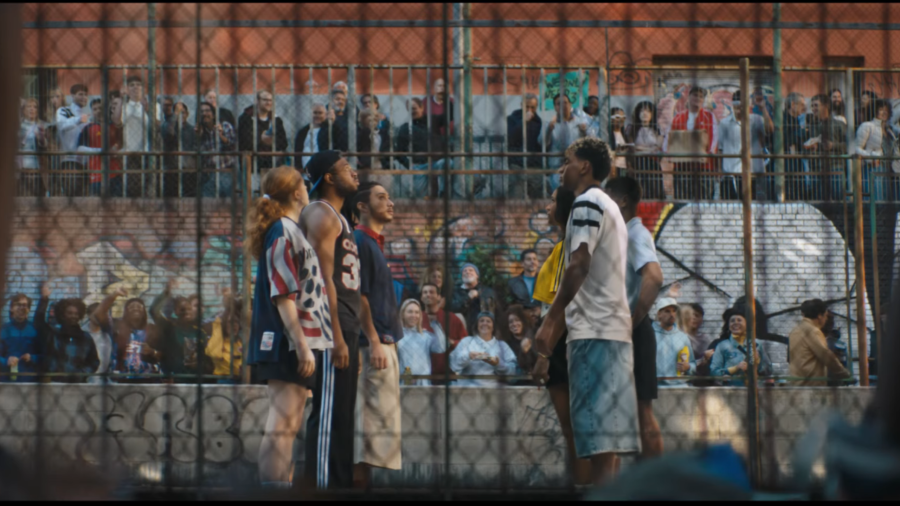
At first glance, it sounds almost like a fantasy casting exercise. But the film — just five minutes long — is built around a simple idea: what if your dream football team started in a backyard, not a stadium? Chalamet leads that imagination, appearing as himself, a fan building his ideal squad. Alongside him is Bad Bunny, with appearances from Lionel Messi, David Beckham, Zinedine Zidane, Jude Bellingham, Lamine Yamal, and Trinity Rodman.
It's a mix that spans eras, continents and industries, but somehow feels cohesive, like football memory stitched together through different generations.
The campaign is part of Adidas' major build-up to the FIFA World Cup 2026, which will take place across North America between June 11 and 19. As a Tier 1 partner — a deal reportedly worth around £120 million to £160 million ($150 million–$200 million) — Adidas is clearly using this moment to do more than promote sport. It's trying to tell a cultural story around it.
A Football Film That Feels More Like A Daydream Than An Advert
What makes Backyard Legends stand out is that it doesn't behave like a traditional sports commercial. There's no scoreboard tension or match-day drama. Instead, it feels loose, playful and a little nostalgic, like someone remembering how football actually begins.
Chalamet's role captures that feeling well. He's not portrayed as a celebrity stepping into sport, but as someone simply imagining it, building a team the way many people once did as kids: mixing favourites from different eras, arguing over legends, and turning everyday spaces into pitches.
That sense of imagination runs through the entire film. Bad Bunny brings a music-world energy that sits naturally alongside football culture. Beckham and Zidane represent legacy and history. Younger stars like Bellingham and Lamine Yamal reflect where the game is now. Trinity Rodman adds another layer, reminding viewers how much women's football has grown in global visibility.
Rather than forcing these names into a competitive narrative, the film lets them exist in the same imaginative space, like different chapters of the same football memory.
Why Adidas is Leaning Into Culture Instead of Just Sport
This campaign also says a lot about where sports advertising is heading. Adidas isn't just showing football as a game anymore, it's presenting it as something that lives across music, fashion and film.
Chalamet and Bad Bunny aren't there by accident. They represent audiences who may not traditionally engage with football marketing but are deeply embedded in culture. One comes from cinema and fashion, the other from global music and street culture. Together, they broaden the campaign's emotional reach.
It's a smart move. Football today isn't just watched, it's styled, shared, clipped, reposted and discussed across platforms. So the storytelling around it is changing too.
The 'Backyard' Idea Is What Holds It All Together
At the centre of everything is the 'backyard' concept, and that's what makes the campaign feel grounded rather than flashy.
Before stadiums, sponsors and global tournaments, football was often just a simple game, played in small spaces with no real rules beyond what everyone agreed on. That idea gives the film its emotional pull.
Adidas uses that familiarity to bring together completely different worlds. You've got Hollywood, reggaeton, elite football, and rising young talent all placed in the same imaginary setting. But instead of feeling chaotic, it feels oddly familiar, like the kind of dream team conversations people have grown up having.
It's not about realism. It's about memory.
A Crossover Between Fashion, Music and Football Culture
One of the most interesting things about this campaign is how naturally it sits in the overlap between industries. It doesn't feel like a football advert trying to be fashionable, it feels like all those worlds already sharing the same space.
Chalamet brings a kind of fashion-film crossover energy that fits Adidas' recent direction. Bad Bunny adds music credibility and global influence. Beckham and Zidane bring nostalgia and authority. The younger players bring immediacy and future potential.
It's less about individual fame and more about cultural recognition, the kind where each face carries its own audience and its own meaning.
Adidas and the Build-up to FIFA World Cup 2026
With the FIFA World Cup 2026 set to take place across multiple North American cities, brands are already competing for attention in a crowded cultural moment. Adidas is clearly aiming for something more lasting than a single campaign cycle.
By focusing on storytelling rather than product, it positions itself as part of the emotional build-up to the tournament. The £120–£160 million ($150–$200 million) investment makes that ambition clear, this isn't just visibility, it's cultural positioning.
Instead of centring on boots or kits, the campaign centres on people. And more importantly, the feeling of football itself.
Final Thought: Why This Campaign Feels Different
What makes Backyard Legends land is its simplicity. It doesn't try to over-explain football or turn it into something bigger than it needs to be. Instead, it brings it back to something very familiar.
A group of people. An open space. A shared imagination.
By placing Timothée Chalamet, Bad Bunny and football legends in the same backyard, Adidas isn't just building a campaign for the World Cup.
It's reminding everyone that football doesn't really start in stadiums, it starts wherever people decide to play.