
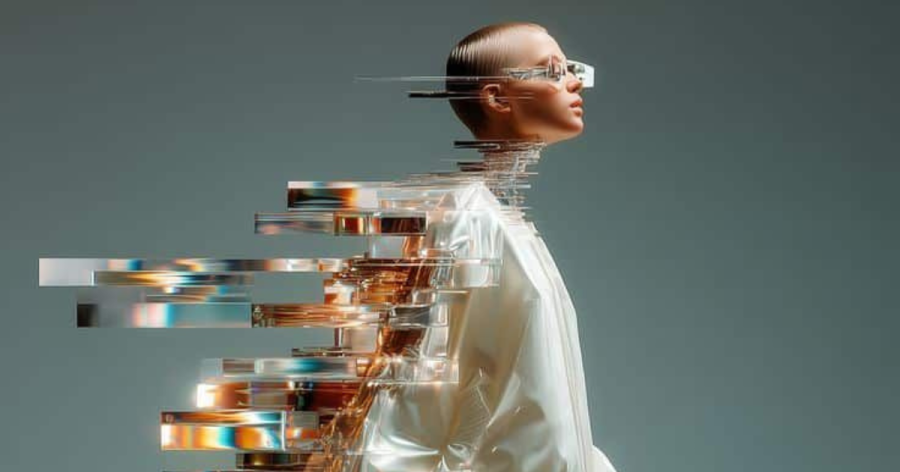
Artificial intelligence has already transformed everything from customer service to content creation, but fashion may be entering its most significant technological shift yet. Increasingly, the models appearing in online campaigns and e-commerce listings are not people at all. Instead, they are digital creations generated by AI, designed to showcase clothing without ever stepping onto a set.
What was once considered futuristic is rapidly becoming a reality across the retail sector. From luxury labels experimenting with virtual ambassadors to independent brands embracing AI-generated imagery to reduce production costs, the industry is exploring how technology can streamline the way fashion is marketed and sold. The trend is also raising new questions about authenticity, transparency and the future role of human talent in an increasingly digital marketplace.
The debate recently gained fresh attention after Australian fashion retailer The Iconic began using AI-generated models for selected product imagery. The move highlighted a growing industry conversation around how brands can balance innovation with customer trust, particularly as digital models become increasingly difficult to distinguish from real people.
When the Model Isn't Real
For years, online fashion retail has relied on traditional photography to help customers understand how garments fit and move. Today, advances in generative AI mean brands can create highly realistic models, poses and campaign visuals without arranging a physical photoshoot.
These digital figures are often developed using existing product photography and advanced image-generation tools, allowing retailers to create multiple marketing assets in a fraction of the time and cost associated with conventional production.
According to The Guardian, AI-generated models are now appearing across various fashion platforms, creating a new category of digital representation that sits somewhere between traditional modelling and computer-generated imagery.
The technology is evolving so quickly that many consumers may not immediately realise the person wearing a garment online does not actually exist.
Why Fashion Brands Are Embracing AI
The appeal is easy to understand. Traditional fashion campaigns can require significant investment in casting, photography, travel, styling, hair and make-up teams, studio rental and post-production editing.
For emerging labels operating in a competitive retail landscape, AI offers a potentially more affordable alternative.
Australian fashion label Atoir, whose designs have been featured using AI-generated imagery, argues that the technology can provide valuable flexibility for independent brands.
In a statement, the company said: 'The Australian fashion industry is highly competitive, particularly for independent brands. We believe that when used responsibly, tools like this can help smaller businesses to operate with greater agility while still maintaining the creative standards and product integrity that matter to both the brand and the customer.'
For smaller companies, the ability to produce campaign imagery quickly and efficiently could represent a significant commercial advantage, particularly as online shopping continues to dominate retail growth.
Transparency Becomes the New Luxury
As AI-generated imagery becomes more common, transparency is emerging as one of the industry's biggest concerns.
Consumers increasingly expect honesty from brands, particularly when making purchasing decisions online. If a model is digitally created, should customers be informed? And how can retailers ensure that garments are represented accurately when the person wearing them does not physically exist?
The Iconic has addressed this issue directly. In a statement, the retailer said: 'Where AI-generated imagery is used to advertise products for sale on our platform, we expect that it is clearly labelled and that the product itself is represented as accurately as possible for customers.'
That emphasis on disclosure reflects a growing industry consensus that transparency will be critical to maintaining customer confidence.
Fashion has always relied on aspiration, but online shoppers also need practical information about fit, fabric and proportion. If AI-generated imagery fails to accurately represent a product, it risks undermining trust and increasing returns.
A Changing Definition of Authenticity
Fashion has always adapted to technological change. From the arrival of digital photography to the rise of social media influencers, every major innovation has altered how brands communicate with consumers.
AI-generated models represent the latest chapter in that evolution. Supporters argue that the technology can democratise content creation and help smaller labels compete with larger players. Critics, however, question whether replacing human faces with algorithm-generated ones risks stripping fashion of the individuality and emotional connection that have long driven its appeal.
For now, both approaches are likely to coexist. Human models continue to offer authenticity, personality and storytelling that technology cannot easily replicate, while AI provides speed, efficiency and scalability.
The Future of Fashion Imagery
As online shopping becomes increasingly digital, AI-generated models are poised to become a more familiar presence across retail platforms. The challenge for brands will not simply be adopting the technology, but using it responsibly.
Customers may be willing to embrace virtual models, provided they know exactly what they are looking at. In that sense, the future of fashion may not be a choice between humans and AI, but a balance of both.
What is clear is that the industry's visual landscape is changing rapidly. Whether viewed as an opportunity or a disruption, AI-generated models are no longer a futuristic concept. They are already reshaping the way fashion is presented, marketed and ultimately purchased.