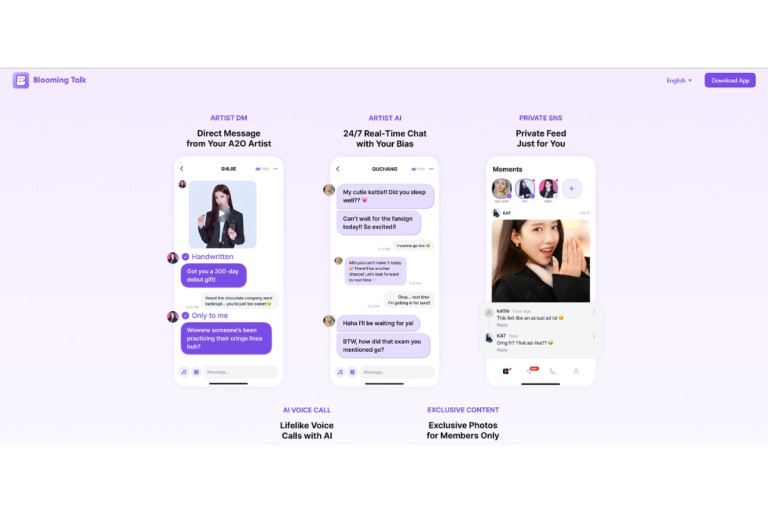
An AI-powered K-pop fan service is facing backlash after offering fans personalised video conversations with digital replicas of performers, including three girl group members aged just 13. Blooming Talk uses artificial intelligence to recreate idols' appearances and voices, allowing users to interact with virtual versions of their favourite stars rather than the performers themselves.
The controversy centres on the commercial use of young artists' digital likenesses, with fans questioning whether sufficient safeguards are in place. Lee Soo-man, the founder of SM Entertainment, introduced the service through his new venture, A2O Entertainment, as part of his return to the Korean music industry in October 2026. The platform was unveiled alongside two new groups, A2O SOUL and A2O LITE.
AI Clones of 13-Year-Old Idols Listed for Sale
The strongest criticism concerns A2O LITE members Ayune, Oa and Aijing, who were all born in 2013 and are 13 years old as of October 2026. South Korean outlet Sports Kyunghyang reported on 15 October that their names appeared in Blooming Talk's in-app purchase listings, each associated with a price of 6,800 South Korean won.
The AI service extends beyond these three performers. Technology company ESTsoft confirmed on 15 October that it had created AI avatars for all 24 members of A2O SOUL and A2O LITE using actual filming data. The platform offers real-time, one-to-one video calls in which users can speak to an avatar that responds on screen.
The groups form part of Lee's 'Zalpa Pop' concept, a name combining Generation Z and Generation Alpha. Both groups feature teenage members from several countries, although their ages vary. The youngest members' involvement has made the question of how AI likenesses are managed particularly sensitive.


Lee Soo-Man's Return Through A2O Entertainment
Lee left SM Entertainment in 2023 after selling his stake in the company to HYBE. Following a three-year restriction on domestic entertainment activities, he returned to the Korean market with a joint debut showcase for A2O SOUL and A2O LITE on 12 October 2026. He introduced Blooming Talk as part of his wider push to combine entertainment with emerging technology.
Blooming Talk is not an SM Entertainment service. Blooming Grace developed it in collaboration with A2O artists' intellectual property and service operations. ESTsoft provides the AI avatar technology, while Mind Logic handles app development.
Earlier coverage of Blooming Talk described AI conversations and personalised responses, alongside features such as voice calls. The latest launch focuses on real-time video interactions, making the experience more immersive than a conventional text-based fan platform.
'Genuinely Disturbing': Fans Question The Ethics
Online reactions have raised concerns about whether lifelike AI versions of children could expose them to inappropriate requests, unwanted digital impersonation or unhealthy parasocial relationships. Some Reddit users have described the involvement of minors as 'genuinely disturbing', while others have questioned how much control young performers have over the use of their voices and faces.
These are concerns about potential risks, not proof that Blooming Talk has already been used for harmful exchanges. Publicly available reporting does not establish that any of the three members were included without consent, nor does it provide a complete account of the consent process for each underage performer.
Nevertheless, the paid listing of the three youngest members has sharpened questions about how their likenesses are commercialised and what happens if users attempt to push AI conversations beyond appropriate boundaries.
What Safeguards Protect the Young Performers?
Blooming Talk's earlier launch coverage said its developers intended to restrict sexual content, inappropriate language and requests for favours. However, the available reporting does not fully explain the current moderation system, whether guardians can review how the young performers are represented, or whether artists can withdraw permission for their digital likenesses to be used.
Those unanswered questions are central to the debate. AI fan services may offer new forms of interaction, but recreating a child performer's face and voice for personalised, paid conversations raises responsibilities that go beyond technical innovation.
For critics, the issue is not simply whether the avatars appear realistic. It is whether meaningful consent, effective moderation and clear protections for young artists are keeping pace with the technology.