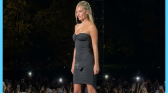
Mia Goth's representatives have hit back at Instagram after an AI-generated selfie of the actress went viral, featuring a pointed message about her estranged husband, Shia LaBeouf. The fake image surfaced shortly after reports emerged that the Pearl star had filed for divorce, fuelling speculation about the couple's relationship.
What made the post even more alarming was how convincing it appeared, with thousands of social media users believing it was real. Some entertainment outlets also treated the image as genuine, prompting Goth's team to confirm that it had been fabricated and raising fresh concerns about Instagram's handling of AI-generated content and celebrity impersonation.
Instagram Under Fire Over AI Photo
The image was posted by an account under @miagoth_, which had a blue Meta Verified tick and more than one million followers. It showed Goth wearing a T-shirt emblazoned with the words 'my ex is my biggest fan' and was accompanied by Beyoncé's 'Single Ladies (Put a Ring on It)'.
The image reportedly attracted hundreds of thousands of likes before screenshots spread across other platforms, with some entertainment outlets treating it as genuine. Goth's representative, Christine Tripicchio, told The Verge that the actress does not use social media and that her team had repeatedly asked Instagram to remove the account for sharing fake AI images.
'The fact that this fan account meets Instagram's criteria to qualify for a "blue check" is disconcerting on a fundamental level,' Tripicchio said. She added that it was 'incomprehensible' that Instagram appeared to prioritise the spread of manipulated images over protecting a public figure's likeness.
Meta spokesperson Alex Dziedzan later confirmed that the account had been removed for impersonating a public figure. Still, the incident has raised questions about whether verification badges can give misleading accounts an appearance of legitimacy.
Mia Goth slams Meta for allowing an AI-generated selfie of herself wearing a “MY EX IS MY BIGGEST FAN” shirt to spread:
— Pop Crave (@PopCrave) October 13, 2026
“It is incomprehensible that Instagram evidently prioritizes the dissemination of forged and manipulated images over the protection and integrity of a public… pic.twitter.com/xkNpvAintC


The Fake Divorce Dig
The fabricated selfie gained traction amid developments in Goth and LaBeouf's relationship, as the actress filed for divorce on 6 October. The filing reportedly listed 28 July 2025 as their date of separation and cited irreconcilable differences.
Goth also sought primary legal and physical custody of the couple's daughter, with visitation rights for LaBeouf. The pair first met while working on Nymphomaniac: Vol. II in 2012 and married in 2016, later welcoming their daughter in 2022.
With their divorce filing making headlines, the T-shirt's message looked like a pointed response to the breakup. However, there is no evidence that Goth wore the shirt or intended to send a message to her estranged husband, as the image was AI-generated.
Shia LaBeouf and Mia Goth spend quality time with their daughter at Universal Studios in Los Angeles. pic.twitter.com/4PCOHl2MI9
— . ݁₊ ⊹ . ݁˖ . ݁ (@popcultureshub) January 19, 2024
Celebrities Face Growing AI Threats
Goth is far from the only celebrity whose likeness has been used in misleading AI content, with Taylor Swift facing a major deepfake controversy in January 2024. Sexually explicit AI-generated images of the singer circulated online, prompting widespread condemnation and renewed calls for stronger safeguards.
Scarlett Johansson has also spoken out over the use of a voice resembling hers in an OpenAI demonstration in 2024, after she declined an offer to voice the company's system. The dispute highlighted concerns about how AI can imitate a person's voice without their involvement in the resulting content.
Although these cases are different, they share a troubling issue. Technology can make fabricated images, audio and videos look or sound remarkably authentic. Once such material spreads across social media, it can be difficult to stop people from believing or sharing it.