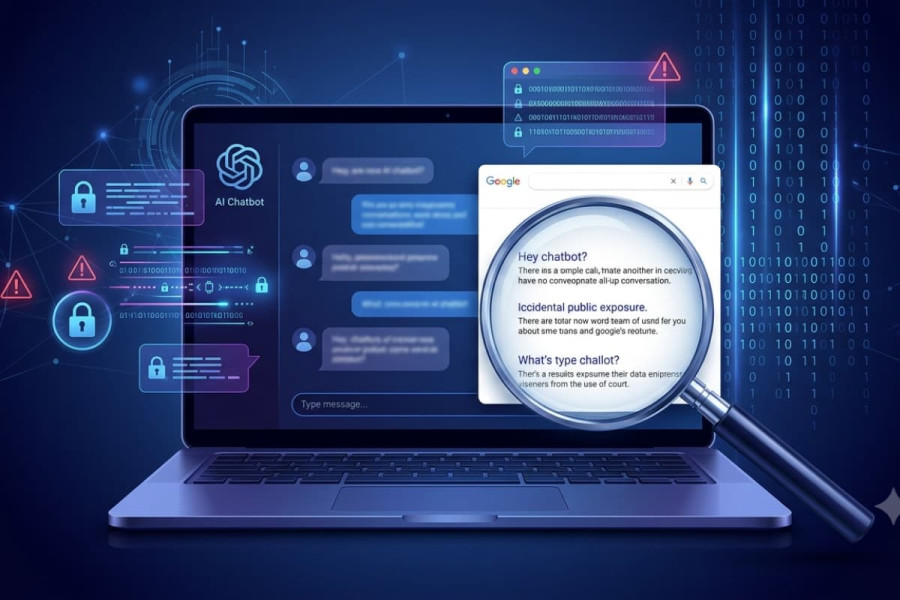
Anthropic has addressed a privacy issue after a number of shared conversations from its Claude AI chatbot briefly became accessible through Google Search, prompting renewed concerns about how AI platforms handle user data and shared content.
The issue came to light over the weekend when users on Reddit discovered that a specific Google search query could reveal publicly accessible Claude conversation links. The search results included a wide range of shared chats, covering everything from programming discussions and work-related notes to fictional writing and other personal conversations.
Some of the exposed chats reportedly contained sensitive information, including cryptocurrency wallet keys and personally identifiable details such as names and addresses. Although the affected conversations had been shared using Claude's built-in sharing feature, many users appeared unaware that the links could be indexed by search engines.
The incident has reignited discussions about AI privacy, online security and the importance of understanding how sharing tools function across popular chatbot platforms.
A trove of users’ seemingly private conversations with Anthropic’s Claude AI chatbot show up in Google search results
by u/marketrent in technology
How the Claude Sharing Feature Works
Claude conversations are private by default. Users must actively choose to generate a shareable link before a conversation can be viewed by others.
The sharing feature creates a unique web page containing a snapshot of a conversation, allowing users to send that specific exchange to colleagues, friends or collaborators. Importantly, these links do not provide access to a user's Claude account, chat history or any conversations beyond the shared snapshot.
According to Anthropic, the company does not intentionally publish directories or sitemaps of these shared conversations to search engines. Instead, it maintains that users who create shared links are making those individual conversations publicly accessible.

An Anthropic spokesperson explained that the company gives users control over sharing their chats and that the links are not intended to be discoverable unless people choose to share them. However, once a link is publicly available, third-party services such as search engines may archive or index it like other publicly accessible webpages.
Issue Appears to Have Been Resolved
Anthropic has since taken steps to address the problem.
By the time reports were widely circulated, the Google search method used to locate the conversations no longer returned the exposed links. However, many of the existing shared URLs reportedly remained active for anyone who already possessed the direct web address.
While the issue appears to have been fixed, it has highlighted an important distinction between a conversation being private by default and a shared conversation becoming publicly accessible through a unique URL.
For users who had unknowingly shared sensitive information, the incident served as a reminder that convenience features can sometimes introduce unexpected privacy risks.
Not the First AI Privacy Incident
This is not the first time AI chatbot conversations have become searchable online.
Reports indicate that a similar issue affected Claude previously, while OpenAI's ChatGPT also experienced a comparable situation in which thousands of shared conversations appeared in Google search results. Elon Musk's Grok chatbot has likewise faced related concerns involving publicly indexed shared chat links.

The recurring nature of these incidents suggests that balancing user-friendly sharing tools with robust privacy protections remains a challenge across the rapidly evolving AI industry.
As AI assistants become increasingly integrated into both personal and professional workflows, users are relying on them for brainstorming, coding assistance, business planning, legal questions and even health-related discussions. That makes accidental public exposure significantly more concerning than the sharing of an ordinary document or webpage.
Why AI Privacy Matters More Than Ever
Modern AI chatbots often serve as digital thinking partners, encouraging users to explore ideas, solve problems and organise sensitive information in ways they might not elsewhere.
Because of this, conversations can contain confidential business material, financial information, personal reflections or identifiable data. Even if users intentionally generate a sharing link, they may not fully appreciate that the conversation could potentially become visible beyond its intended audience.
The latest Claude incident reinforces the importance of reviewing what information is included before creating a shareable link. Users should avoid including passwords, financial credentials, cryptocurrency recovery phrases or other highly sensitive information in conversations they intend to share.
Understanding the difference between a private chat and a publicly accessible shared link is essential for protecting personal information online.
Growing Calls for Stronger Privacy Safeguards
As artificial intelligence continues to evolve, privacy expectations are evolving alongside it.
Technology companies are increasingly under pressure to make sharing features clearer, improve warnings for users and minimise the risk of unintended public exposure. Transparent privacy controls and better user education are likely to become even more important as AI tools are adopted by millions more people worldwide.
While Anthropic has resolved the immediate search indexing issue, the episode serves as another reminder that convenience and privacy must remain carefully balanced. For users of Claude and other AI chatbots, exercising caution when sharing conversations remains one of the simplest ways to safeguard sensitive information in an increasingly connected digital world.