Bubble serums are turning skincare routines into TikTok-ready foam, but dermatology experts say the fizz has no proven advantage over an ordinary serum. The Korean beauty trend has gained momentum in 2026, with search interest up 314.9% year on year, according to data from trend analysis firm Spate cited by cosmetics manufacturer LUK. The bubbling effect may feel like an instant treatment, but no established evidence shows it drives ingredients deeper into the skin.
In comments published on Tuesday, 10 November, dermatology nurse practitioner Jodi LoGerfo and board-certified dermatologist Alicia Zalka questioned whether the foaming delivery system offers anything beyond a different feel. Both stressed that a serum's performance depends on its formulation and active ingredients rather than how dramatically it bubbles. Their comments come as Korean beauty brands turn the texture into a product category of its own.
TikTok's Bubble Serum Boom Has a Paid Side
LUK's analysis of Spate data, published in August, reported a 745.5% rise in TikTok interest in bubble serums. It also reported that 68.5% of TikTok views in its dataset were paid content, making advertising a significant part of its online visibility. Videos have featured users layering bubble serums over essences to create a thicker, slime-like texture for skincare demonstrations.
Watch here: Beauty creator lilyis_ demonstrates Mixsoon's Hyalraebae Pore Bubble Serum alongside the brand's Bean Essence, showing how the products fit into a Korean skincare routine focused on pores.
South Korean beauty review platform Glowpick recognised bubble serums as a separate category in its first-half 2026 awards, placing a Mixsoon product first. The brand's Hyalraebae Pore Bubble Serum lists niacinamide, polyglutamic acid and sodium hyaluronate among its ingredients.
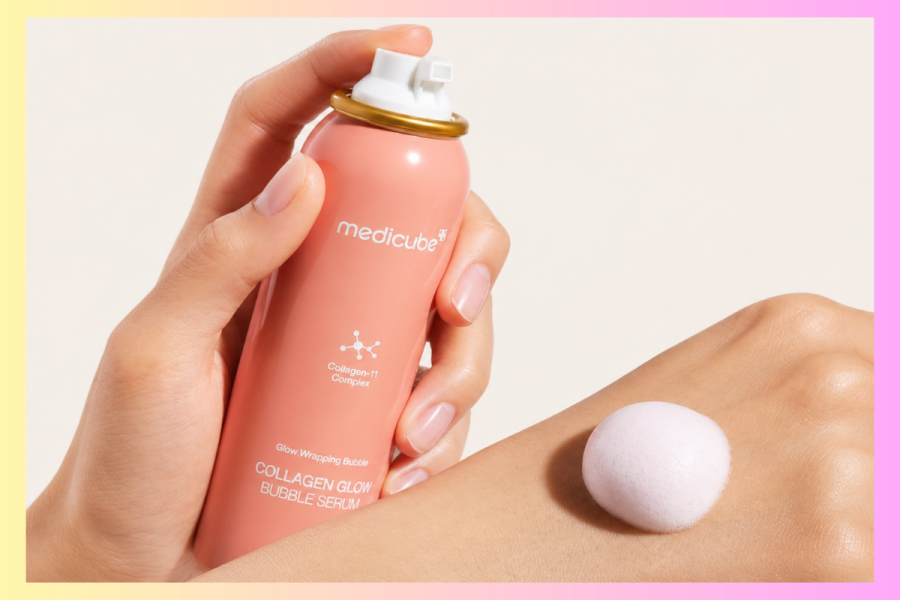
The Collagen Glow Bubble Serum from Medicube, meanwhile, contains glycerin, collagen and several forms of hyaluronic acid, showing how the formulas differ beneath their similar foamy appearance.


Do Bubble Serums Actually Work Better?
There is no proven clinical advantage to the bubbles themselves, according to the experts. LoGerfo described the effect plainly: 'The bubbling is for effect!' A bubble serum can still hydrate or brighten the complexion, depending on ingredients such as hyaluronic acid and niacinamide, but those benefits are not unique to foam.
Zalka advised consumers to 'Always prioritize clinical efficacy over the novelty of the delivery system.' These are leave-on skincare products, not cleansers that need rinsing off simply because they foam. A light, fast-absorbing texture may feel pleasant, but it does not mean that a serum penetrates more deeply or outperforms a comparable liquid formula.
The Irritation Risks Behind the Foam
The playful texture can encourage frequent applications, potentially increasing the risk of irritation when a formula is used beyond its directions. Fragrance and certain foaming ingredients may cause dryness or irritation in people with sensitive skin, particularly those prone to rosacea or dermatitis.
Surfactants can also stabilise cosmetic formulas and create foam; they are not necessarily cleansing ingredients. Some serums contain additional actives: Mixsoon lists capryloyl salicylic acid, while Medicube lists retinal, a vitamin A derivative. The full ingredient list and frequency of use matter more than whether the foam looks satisfying on camera.
Research presented at the European Academy of Dermatology and Venereology Congress on 30 September found that almost 95% of 38 popular Korean skincare and 'glass skin' TikTok videos contained at least one potentially misleading claim. Only one mentioned irritation risks, and none recommended consulting a dermatologist.
This showing up on my tiktok recommended lmaoooo. Glass skin should not even worry about me anyone. I’ll stick to simple cream from boots fr fr 😭😭😭 pic.twitter.com/E7Y4BnY1qM
— brb touching grass (@brvttie) November 20, 2025
The American Academy of Dermatology recommends testing new skincare products on a small area before wider use, following product instructions and stopping if irritation develops. Its guidance also cautions that applying too many products can aggravate the skin. For bubble serums, the evidence-based question is what the formula contains and how the skin responds, not how much foam appears on the screen.