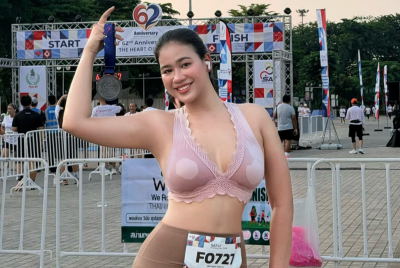
Colombian rapper Chelo Hop has sparked controversy after stepping on an Israeli flag during her performance at Hip Hop al Parque 2026 in Bogotá, Colombia. The incident took place during the free music festival, where the artist showed support for Palestine.
Videos of the moment spread online, showing Chelo Hop stepping on the flag while continuing her performance. Israel's ambassador to Colombia later spoke out against the act and called on local authorities to respond.
The incident has drawn attention to the use of live music as a form of political protest. It has also raised questions about how artists express their views onstage, particularly when national symbols become part of a performance.
What Happened Onstage
The incident took place during the 28th edition of Hip Hop al Parque, held at Simón Bolívar Park on 24 and 25 October 2026. Chelo Hop was among the local artists selected to perform at the event, which celebrates hip-hop music and culture in Colombia.
Colombian artist Chelo Hop stomps on the Israel flag during her Hip Hop al Parque 2026 set. pic.twitter.com/epdWLXPIIY
— Pop Crave (@PopCrave) October 26, 2026
Footage of the performance shows an Israeli flag being brought onto the stage before Chelo Hop steps on it. The moment quickly gained attention online, with viewers discussing the use of a national flag during a live music performance.
Reports also linked the performance to the artist's support for Palestine. During the moment, she was heard chanting 'Palestina Libre', which means 'Free Palestine' in English. The act of stepping on the flag and the political message behind the performance have since become topics of public debate.
Israel's Ambassador Responds
Vivian Aisen, Israel's ambassador to Colombia, publicly condemned the act on Monday, 26 October. She said she strongly rejected the trampling of Israel's flag during the festival and questioned how people would react if Colombia's own flag were treated the same way in another country.
Aisen called on the Bogotá city government and Colombia's Foreign Ministry to respond to the incident. She argued that the act showed disrespect towards Israel and people who identify with its flag. Her response moved the dispute beyond the festival into a broader discussion of relations between countries and the treatment of national symbols.
The ambassador also tagged Bogotá Mayor Carlos Fernando Galán and the city's arts institute, known as Idartes, in her public message. She called on the authorities involved in the festival to respond. An official response from the city government, Idartes or the Foreign Ministry specifically addressing the incident had not been confirmed in the reports available as of 26 October.


Chelo Hop's Music and Message
Chelo Hop's music often explores social issues through rap. Her work covers topics such as identity, resistance, and women's experiences, using personal stories and her views of the world around her.
The rapper performs as part of a project with music producer AstrallBass. Their work combines her lyrics with his production, letting her share personal and social messages through hip-hop.
Hip Hop al Parque provides a public stage for local and international artists in Bogotá. The free festival took place over two days, on 24 and 25 October, bringing together performers from different parts of the hip-hop scene. Chelo Hop's appearance was part of the event's programme of local acts.
Debate Over Political Protest
The incident has renewed discussion about how artists use their performances to express political views. Music events can give performers a chance to speak about issues they care about, including conflicts and human rights concerns.
However, the use of national flags in political protests can also lead to anger and disagreement. While some viewers may see the act as a show of support for Palestine, others may view stepping on another country's flag as disrespectful.
The response to Chelo Hop's performance shows how a moment onstage can reach far beyond a music festival. As the video continues to draw attention, further comments from the artist or local authorities could add to the debate over political expression at public events.