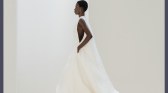
One small metal teardrop is all that separates a Gucci model from a very public wardrobe malfunction. The Gucci Gravity Dress, the closing look from Demna's Spring/Summer 2027 collection, has split online opinion since a video of it moving down the runway began circulating. Some people call it clever couture engineering, and others simply want to know what happens if the wearer sneezes.
The beige, backless gown closed The Store Show, and Demna is reportedly proudest of it. The fabric drapes over one shoulder and is said to be held in place by its own weight, with no straps or conventional construction. Gucci has not given the dress an official name, so fans and critics have started calling it the Gravity Dress.
How Does the Gucci Gravity Dress Work?
The weight pulls the draped fabric down, and that pull is meant to keep the backless shape in place. Most backless gowns hide their support in boning, adhesive tape, or a carefully cut bodice, so showing off a single anchor is a bold choice. On a model walking in a straight line, the idea looks neat, but on a person who moves, sits, and hugs friends, it is much harder to picture.
The piece relies on a precision-engineered anchor to hold the entire silhouette in tension. Without conventional interior support, the dress treats gravity as a structural partner rather than an obstacle, making its physics entirely dependent on that single, exposed metal point.
Gucci’s SS27 Dress by Demna held together by one hanging weight😳 pic.twitter.com/CBs7OeNVoB
— Outlander Magazine (@StreetFashion01) October 12, 2026
Is It an Isolated Experiment or Demna's New Pattern?
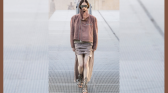
While the Gravity Dress is the most extreme example, it was not the only piece in the collection testing the limits of tension and exposure. Demna's debut presentation featured clever, hardware-led construction—including tailored jackets held together near the lapel by single metal ornaments, cropped torsos that split tailoring along precise lines of exposed skin, and heavy, oversized Horsebit chains anchoring slouched, voluminous garments.
Across both menswear and womenswear, the collection frequently used exaggerated weight and hardware to reshape how fabric sits on the body. Up close on the runway, the Gravity Dress emerges not as a one-off gimmick, but as the conceptual climax of a show obsessed with how metal, gravity, and skin interact.
GUCCI SS27 BY DEMNA pic.twitter.com/1luNXSV8JM
— Gregor Estevan (@gregor_estevan) October 6, 2026


Can It Survive a Red Carpet?
Comments online fall into two camps. The first is about practicality, with viewers asking whether the weight could slip at the worst moment and whether anyone could dance, hug a friend or climb out of a car in it. One popular comparison likens the weight to a toilet pull-chain, showing how closely people are studying the mechanics.
it also looks like a toilet pull-chain
— Alex Greenland (@ajrgd) October 12, 2026
The second camp is about fit. Many responses argue the design assumes a particular body type, with fuller busts as the obvious sticking point, turning a runway joke into a real question about who couture is made for. A smaller group loves the less-is-more idea and calls the look sexy.
unironically not designed for women with two weights hanging in the front
— Eri ♡ (@musestoomuch) October 12, 2026
Genius Design Or Viral Stunt?
Demna joined Gucci as creative director in 2025, and his years at Balenciaga leaned on streetwear and provocation built for sharing, so a finale that sparks jokes should surprise nobody. The contrast with Gucci's past is sharper. Tom Ford's Gucci was sleek and sensual, and Alessandro Michele's was maximalist and eclectic, but a single weight on a bare back is neither.
gabbriette in gucci fw04, tom ford’s final collection for the brand ★ pic.twitter.com/4IlM4A9LNb
— DUDA (@saintdemie) July 22, 2025
Supporters call it disciplined, engineering-led minimalism, and critics see a stunt designed for the timeline. So far, both are partly right. The Gucci Gravity Dress is a runway design feat and a real wardrobe risk anywhere else, and that split is exactly what makes it so hard to ignore. Whether it ends up on a red carpet or strictly in brand archives, it has already achieved Demna's primary goal: putting Gucci at the exact centre of the fashion conversation.