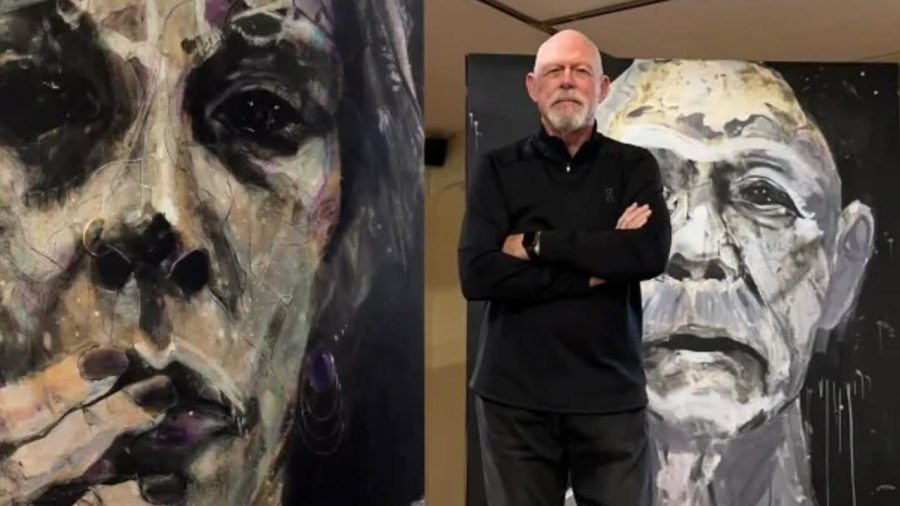
A series of haunting portraits displayed inside a Johns Hopkins clinic has left plenty of people doing a double take after photos of the waiting room spread online. While many initially questioned why such unsettling artwork would hang inside a medical facility, the answer reveals a moving mission centred on addiction, mental health and hope.
The paintings are part of artist William Stoehr's travelling exhibition called 'Art for Hope', which uses powerful imagery to encourage conversations about substance use disorder. Rather than simply decorating hospital walls, the portraits aim to break stigma and inspire people to seek understanding and treatment before it is too late.
Photos Left Viewers Curious
A Reddit post showing the clinic's waiting room quickly caught attention, with viewers describing the oversized portraits as eerie, unsettling and even frightening. The unusual artwork seemed like the last thing many people expected to see while waiting for a medical appointment.
As the discussion grew, people began asking why a hospital would choose such emotionally intense paintings instead of peaceful landscapes or calming photographs. The answer turned out to be far more meaningful than the artwork's first impression suggested.
Powerful Portraits Carry A Bigger Mission
The paintings belong to William Stoehr, whose work focuses on reducing the stigma surrounding substance use disorder and the mental health struggles that often accompany it. His exhibition has appeared inside hospitals and research facilities, including Johns Hopkins Bayview Medical Center and the National Institute on Drug Abuse.
Instead of creating comfortable surroundings, Stoehr intentionally produces portraits that stop people in their tracks. His hope is that the emotional response encourages conversations that many families often avoid until a crisis occurs.
His Sister Inspired The Portraits
The project is deeply personal for the Colorado artist because it began after the loss of his sister to an opioid overdose. Stoehr has said she might still be alive if addiction had been treated as a medical condition rather than something surrounded by shame and silence.
One portrait, known simply as 'Emma', honours his late sister while also representing countless victims, survivors and families affected by addiction. He has continued using the name throughout his collection because it has become a symbol for everyone touched by substance use disorder.
Science And Art Came Together
Stoehr's work also attracted the attention of scientists, including Dr Nora Volkow, director of the National Institute on Drug Abuse. Together, they have promoted the idea that addiction is a disease, not a moral failing, and that reducing stigma is essential if more people are to seek treatment.
The artist has spent years studying neuroaesthetics, a field that explores how the brain responds to visual art. By slightly altering facial expressions and creating intentional ambiguity, he hopes viewers will experience empathy rather than simply observe another painting.
Every Face Tells Someone's Story
Many of the portraits feature expressive eyes, distorted features and layered textures that make them feel both beautiful and unsettling. Those artistic choices are deliberate because they reflect the pain, uncertainty and resilience experienced by people living with addiction and those who love them.
Stoehr has explained that the faces represent victims, witnesses and survivors alike. In his view, addiction never affects only one individual because every family member and friend also carries part of the emotional burden.
The Art Started Conversations
Although the paintings may appear frightening at first glance, they were never intended to shock people for the sake of attention. Their real purpose is to encourage compassion, reduce fear surrounding treatment and remind visitors that recovery begins with honest conversations.
That is why the portraits continue appearing in healthcare settings instead of traditional galleries. For many visitors, the artwork transforms from something unsettling into a reminder that behind every face is a person whose story deserves understanding, support and hope.