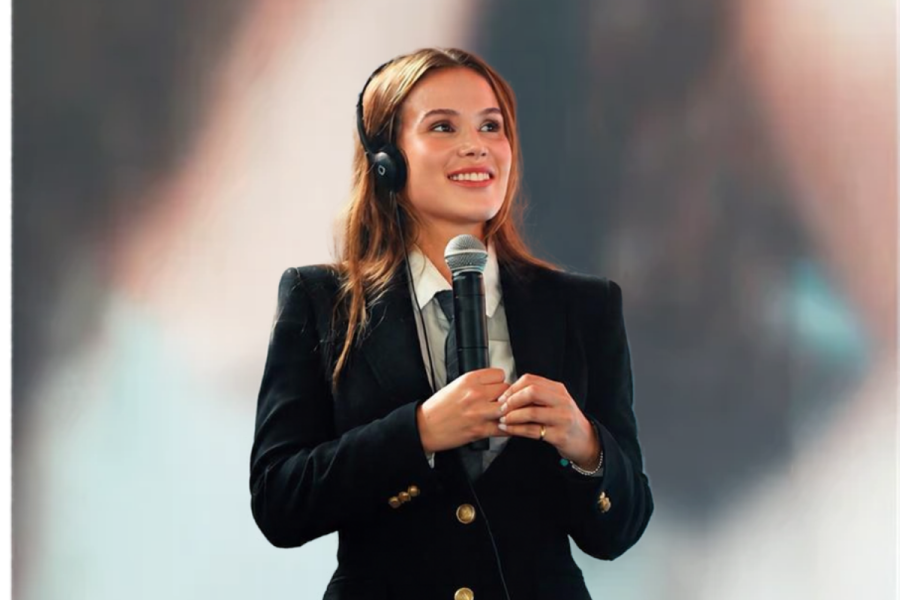
Jeniffer Castro, the Brazilian woman who became an internet sensation after refusing to give up her pre-booked window seat to a four-year-old boy, has turned the viral moment into a new public-facing career. On 26 September 2026, she was listed on the HJ Conference programme in Concórdia, Santa Catarina, with a talk titled 'The Power of No: I Didn't Give Up My Seat and Found My Place'.
The appearance marks a striking shift for Castro, who worked in banking before a 38-second plane video changed her life in December 2024. Nearly two years later, event organisers now describe her as a positioning and authenticity specialist and a mentor to female leaders, with the seat dispute serving as the origin story for her message about boundaries.
🚨 The airplane window seat woman who went viral for refusing to move for a 4-year-old is now SUING the airline AND the passenger who filmed her! ✈️
— Michael Snyder (@Revelation1217) October 4, 2026
Jeniffer Castro lost her banking job due to the massive internet backlash.
Do you feel sorry for her?👇pic.twitter.com/ewXhgYjnOw
The Viral Plane Seat Dispute
Castro went viral on 4 December 2024 after footage showed her seated by the window on a GOL flight from Rio de Janeiro to Belo Horizonte while another passenger criticised her for refusing to move. The boy had initially been sitting in Castro's assigned seat because he wanted to sit beside his grandmother, but his mother, Aline Rizzo, later said she had not asked Castro to give up the spot. The woman who recorded the exchange, Eluciana Cardoso, was another passenger, a detail that became important after early social posts wrongly framed her as the child's mother.
Castro later explained that she had selected the window seat in advance and declined when a fellow passenger suggested she move to an aisle seat so the boy could sit beside his grandmother. 'I walked onto the plane and the child was in my seat,' she recalled while describing the encounter. The video sparked a huge debate over travel etiquette, children, personal boundaries and whether passengers should feel obligated to surrender seats they selected.

From a Window Seat to Viral Fame
The backlash quickly turned into attention. Within days, Castro had gained more than 2 million Instagram followers and moved into influencer work, including campaigns with Brazilian retailer Magazine Luiza and beauty brand Colorama. The unexpected fame also came with a darker side, and Castro said soon after the incident that she was receiving messages that made her fear for her safety.
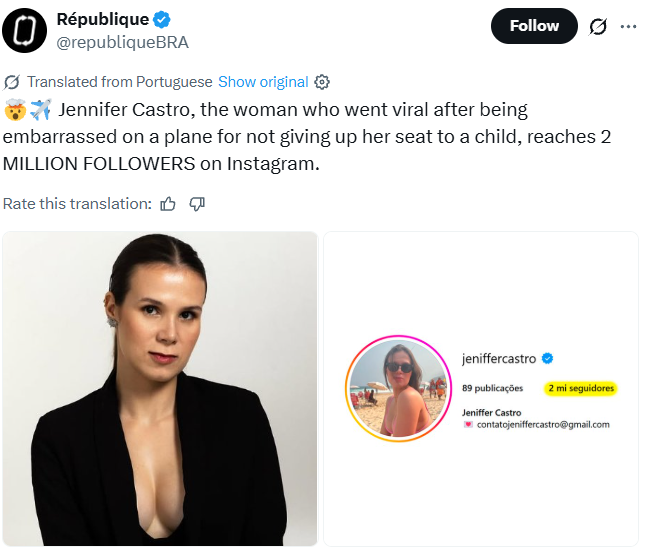
'What I went through wasn't easy,' Castro said in her first interview after the video spread. She described trying to process both the support and the attacks while limiting the exposure of family members online. Even so, the incident continued to follow her professionally, first through brand partnerships and social media work, and now through speaking engagements built around the same decision that made her famous.
Her Viral 'No' Is Now a Conference Talk
At the 2026 HJ Conference, Castro's session was placed in the personal development programme and centred directly on the plane incident. Organisers said the talk used her refusal to switch seats as a starting point for discussing how to say no, set boundaries and stand by personal choices. The conference, held from 24 to 26 September, drew more than 6,000 attendees and featured more than 400 attractions spanning business, leadership, technology and personal development.
Castro's current professional positioning makes the evolution unusually literal: she became famous for refusing to give up one seat, then built part of her career around explaining why she did it. Her conference title, 'The Power of No: I Didn't Give Up My Seat and Found My Place', turns the original controversy into a message about self-advocacy rather than airline etiquette alone. What began as an unwanted viral video has now become the central story behind her work as an influencer, speaker and mentor.