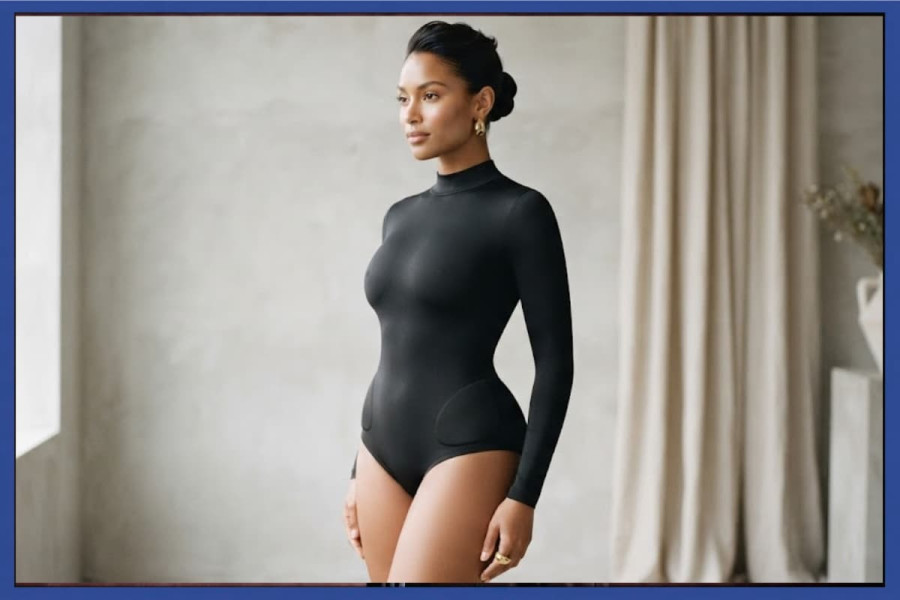
Marks & Spencer has found itself at the centre of a debate about changing beauty standards after launching a £28 bodysuit designed to enhance the wearer's hips and create the appearance of a more pronounced hourglass figure.
The Body by M&S Body Sculpt Hip Boost All In One is part of the retailer's shapewear collection. Unlike traditional shapewear, which is largely designed to smooth or compress areas of the body, the garment uses removable pads to add volume around the hips.
The launch has prompted criticism from body image experts and commentators, who have questioned whether the growing popularity of enhancement-focused clothing could contribute to pressure on women to modify their bodies to fit changing ideals.
The discussion comes as fashion continues to move between different ideas of the 'ideal' silhouette, with exaggerated curves appearing alongside renewed interest in slimmer body shapes.
What Is M&S's £28 Hip Boost Bodysuit?
The Body by M&S Body Sculpt Hip Boost All In One is priced at £28 and is listed in M&S's shapewear range.
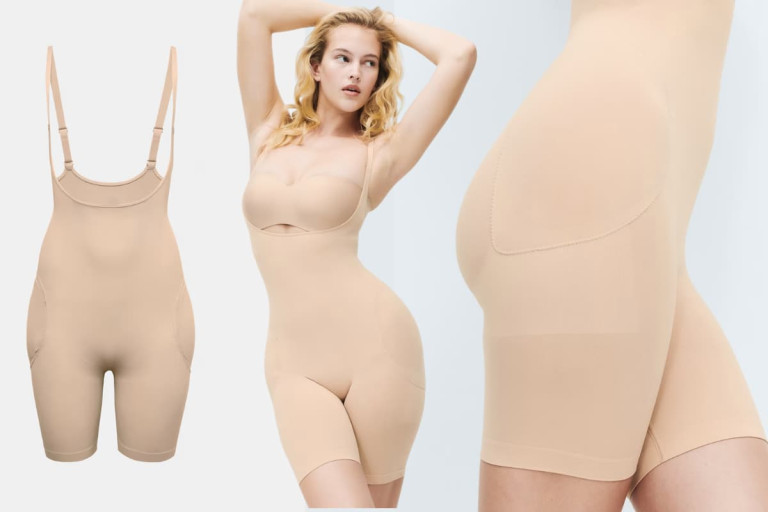
According to the retailer's product description, the bodysuit features pockets at the hips where removable pads can be inserted. The design combines firm-control shapewear with added padding, allowing the wearer to create a fuller-looking silhouette around the hips.
The concept is similar to padded underwear, where inserts can be used to change the appearance of particular areas of the body.
M&S lingerie director Charlotte Davies said the idea was influenced by customers looking for 'subtle enhancement', alongside comfort and confidence. She also pointed to influences from fashion and celebrity culture.
The product therefore represents a slightly different approach to conventional shapewear. Instead of simply making the stomach, waist or thighs appear smoother or smaller, it allows wearers to add volume to specific parts of their figure.
M&S already sells other enhancement-focused products, including padded bum shorts, meaning the concept is not entirely new to the retailer.
Why Has the Bodysuit Sparked a Body Image Debate?
The debate is not necessarily about shapewear itself, but about what the growing market for body-enhancing garments could say about changing beauty standards.
Traditional shapewear has often focused on creating a smoother or slimmer appearance. The M&S hip booster takes the opposite approach in one area, adding padding to create more pronounced curves.
The Guardian reported that the product forms part of a growing trend towards 'enhancement shapewear', while The Independent examined whether the fashion for exaggerated curves could contribute to renewed pressure surrounding women's bodies.
Psychotherapist and social critic Susie Orbach has criticised the wider trend, arguing that women can increasingly feel compelled to alter their bodies as beauty ideals change. Professor Victoria Pitts-Taylor has also discussed the role of consumer culture and social media in creating pressure around appearance.
Such criticism does not necessarily mean that every woman who buys shapewear is responding to social pressure. For many consumers, padded or sculpting garments may simply be another styling choice.
The concern raised by critics is broader: when retailers, celebrities and fashion designers repeatedly highlight particular proportions as desirable, consumers may feel that their natural bodies do not fit the current ideal.
M&S’s ‘Hip Boost’ Bodysuit Sparks Debate on Body Shaming Trends https://t.co/13N4vSKgsg
— Policy Wire (@policy_wire) September 9, 2026
From Kardashian Curves to Padded Shapewear
M&S's launch also arrives amid renewed interest in exaggerated hourglass silhouettes.
Kim Kardashian's Skims has helped make padded shapewear more visible in the mainstream. The brand previously launched shorts featuring hip padding, allowing wearers to alter their proportions through clothing rather than cosmetic procedures.
M&S's bodysuit follows a similar concept, although the product is positioned as an optional styling and shapewear garment.
The trend has also appeared on fashion runways, where designers have experimented with exaggerated hips, padding and dramatically shaped waists. Collections from fashion houses including Schiaparelli, Dior and Alaïa have incorporated enlarged or reconstructed silhouettes in different ways.
That reflects one of the more unusual aspects of today's beauty landscape. Consumers can be encouraged to make one part of the body appear smaller while simultaneously adding volume elsewhere.
Are Beauty Standards Becoming a Moving Target?
The conversation around M&S's hip booster comes amid concerns about the changing representation of different body types in fashion.
Vogue Business's Autumn/Winter 2026 size-inclusivity report found that plus-size models accounted for just 0.3 per cent of the 7,817 looks analysed across 182 shows and presentations.
Another data point reported by a retail analytics platform showed a seven per cent fall at M&S in the number of new dresses available in UK size 18 and above when July and August 2026 listings were compared with the same period in 2024.
Importantly, that figure refers specifically to new dress listings and should not be interpreted as a seven per cent reduction in M&S's entire plus-size clothing range.
At the same time, exaggerated curves continue to feature in celebrity styling, fashion imagery and some runway collections. The result is a beauty ideal that can appear contradictory: extremely slim proportions in some areas combined with fuller hips or other exaggerated features.
As trends change, so are the body shapes presented as desirable. Previous decades have moved between different ideals, from ultra-slim silhouettes to curvier figures and back again.
For consumers, that can create what critics describe as a constantly shifting target of physical perfection.
Is M&S Bringing Back Body Shaming?
Whether the M&S bodysuit represents a return to body shaming is ultimately a matter of interpretation, not fact. M&S has not stated that women should have a particular body shape, and the existence of a hip-enhancing garment does not mean consumers are expected to wear it.
The company has instead presented the product as an optional form of enhancement, giving customers another way to alter their silhouette through clothing.
However, critics argue that individual products can still contribute to wider cultural pressures when similar beauty ideals are repeatedly promoted through fashion, celebrity culture and social media.
Psychologist Dr Martine Robson told The Independent that beauty standards can become a 'moving target of perfection', potentially leaving women feeling that their bodies are the wrong size or shape while being offered products that promise to change them.
What Does the Trend Say About Modern Shapewear?
The M&S bodysuit illustrates how shapewear has evolved beyond simply concealing or compressing parts of the body.
Modern garments can now be used to create curves, enhance particular features and produce silhouettes that may be difficult to achieve naturally through clothing alone.
For some shoppers, that may simply be another form of fashion experimentation. For others, the growing availability of body-altering products may reinforce the idea that the natural body needs to be changed to keep up with current trends.
Ultimately, the £28 M&S Hip Boost bodysuit is unlikely to settle the debate over beauty standards. Instead, it has become another example of how quickly the preferred body silhouette can change and how the fashion industry can provide new products to help consumers follow it.
The bigger question is whether fashion should simply help people dress the bodies they have, or whether increasingly sophisticated shapewear will continue to offer ways to transform those bodies into whatever shape happens to be considered fashionable next.