
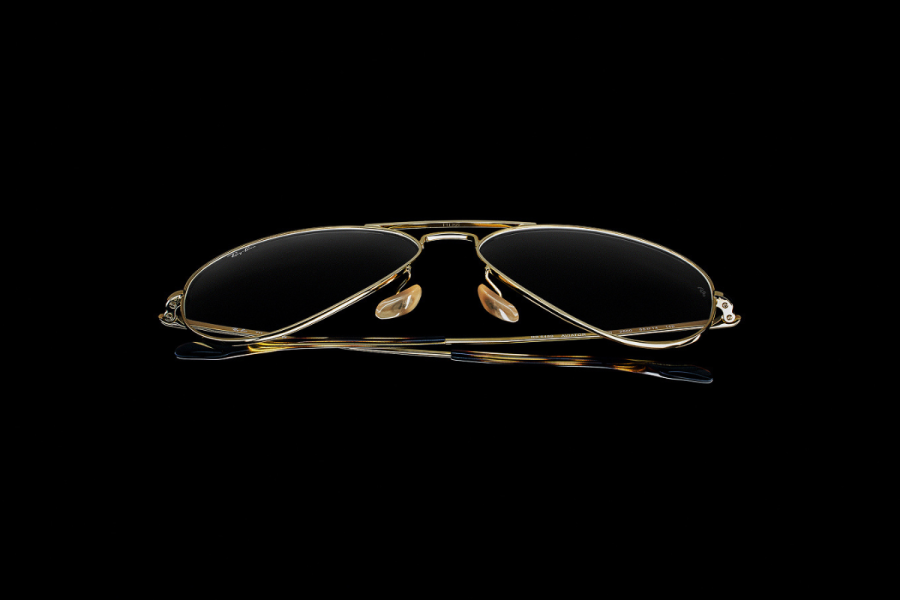
They were never meant to be a fashion statement. In fact, their original purpose was far more urgent to stop military pilots from being blinded by lethal glare at high altitude.
Yet nearly a century later, Ray-Ban Aviators are not just surviving in the fashion world — they are dominating it. From wartime cockpits to Hollywood blockbusters and red carpets, the distinctive teardrop sunglasses have become one of the few accessories in history to genuinely conquer every generation.
What began as a piece of functional military equipment in the 1930s has evolved into a global symbol of confidence, rebellion, and effortless style worn by presidents, rock stars, and some of cinema's most recognisable leading men.
The Aviator's appeal lies in its rare combination of function and identity, a design born from necessity that quickly became a cultural shorthand for authority and cool.
Born In The Skies: A Design Forged Under Pressure
The Aviator story begins with one simple problem: pilots were struggling.
As aviation advanced in the early 20th century, pilots flying at high altitude were exposed to intense sunlight, glare, and eye strain that could affect performance and safety. American pilot John Macready worked with optical specialists Bausch & Lomb to develop a solution — lightweight sunglasses that could protect the eyes without restricting vision.
The result was a slim metal frame with oversized, teardrop-shaped lenses designed to block sunlight from every angle while maintaining a wide field of view. Early versions used green-tinted lenses to reduce glare and improve contrast in the sky.
What made the design revolutionary was not just its practicality, but its look. Even in its earliest form, it carried an unmistakable aesthetic edge, sleek, minimal, and almost futuristic for its time.
During the Second World War, that image was amplified. Photographs of military leaders, including General Douglas MacArthur, wearing Aviators during wartime operations, helped cement the sunglasses as a symbol of authority, discipline, and courage. Suddenly, they were no longer just equipment; they were identity.
Hollywood, Music, And The Moment Cool Was Redefined
If the military gave Aviators credibility, Hollywood gave them immortality.
By the late 20th century, sunglasses had fully entered popular culture. Musicians and actors began adopting them not for their function but for their attitude. From rock legends to pop icons, the Aviator became a uniform for those who wanted to project confidence without saying a word.
Then came the cultural explosion moment: 'Top Gun' in 1986. Tom Cruise's portrayal of Pete 'Maverick' Mitchell, complete with reflective Aviators and fighter pilot swagger, turned the sunglasses into a global obsession almost overnight. Sales surged, and a new generation associated the style with speed, freedom, and charisma.
But unlike many fashion trends that burn bright and fade, Aviators refused to disappear.
They resurfaced repeatedly, in 90s music videos, early 2000s celebrity street style, and later in social media-driven fashion cycles, where nostalgia became currency. From Michael Jackson to George Michael and beyond, each era found its own version of the Aviator.
A Timeless Formula: Why Aviators Never Disappear
Part of the answer lies in consistency. While fashion houses constantly reinvent silhouettes, Ray-Ban Aviators have remained remarkably unchanged. The same teardrop shape, thin metal frame, and reflective lens continue to define the design almost a century later.
But there is also something deeper at work. The Aviator carries symbolism that transcends trend cycles. It suggests control, confidence, and detachment, a look that can be both anonymous and commanding.
Today, they remain a fixture in luxury fashion, streetwear culture, and everyday wardrobes alike. Influencers style them with everything from tailored suits to casual street outfits, proving their adaptability across aesthetics and generations.