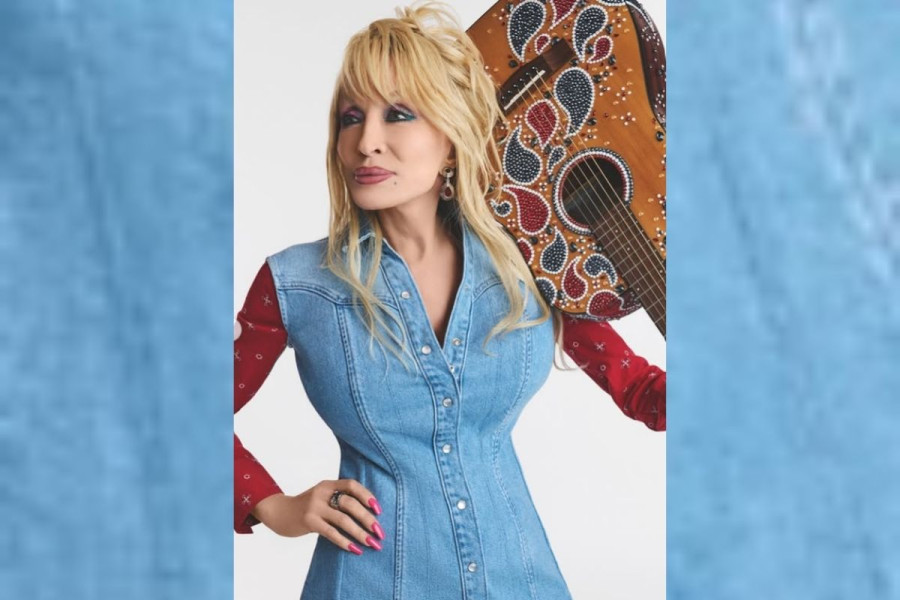
For more than five decades, Dolly Parton has had millions of people begging Jolene not to take their man.
There was just one small problem: the Jolene in question never actually tried.
Parton's 1973 country classic sounds like one of music's most desperate romantic showdowns, with a woman pleading with an impossibly beautiful rival to leave her relationship alone. In real life, however, the story involved a flirtatious bank teller, Parton's famously private husband Carl Dean, and a completely different Jolene who happened to be a little girl asking for an autograph.
In other words, Parton took two unrelated women, a little marital jealousy, and her gift for storytelling. Rather than getting jealous, she got royalties.
Considering the country legend once described the story as 'innocent', she raised a whole generation of fans who know the lyrics by heart and likely wouldn't invite anyone named Jolene over for brunch.
But before you side-eye Jolene to defend Parton's honour, it's worth noting that this bank teller's little crush resulted in a massive hit song that had the country superstar laughing all the way to the bank.
The Real Woman Behind 'Jolene' Was a Bank Teller
Parton acknowledged that the song was 'loosely based on a little bit of truth'.
That truth began after a red-haired bank teller developed what Parton described as a 'terrible crush' on Dean.
Apparently, Dean wasn't exactly suffering through the attention.
'He just loved going to the bank because she paid him so much attention,' Parton recalled during a 2008 interview with NPR.
Soon, his wife noticed that an ordinary banking errand was starting to take on the scheduling demands of a part-time job. Parton recounted teasing him: 'Hell, you're spending a lot of time at the bank. I don't believe we've got that kind of money.'
Parton also remembered the teller as strikingly beautiful and around six feet tall, joking that the woman possessed physical attributes the petite singer did not.
The insecurity underneath 'Jolene', then, was genuine even if the dramatic romantic threat in the finished song was largely Parton's creation.
Fortunately, Parton did not start a fight. Instead, she wrote a hit that would later be inducted into the Grammy Hall of Fame for its lasting historical significance.
Plot Twist: The Bank Teller Wasn't Actually Named Jolene
Here is where the story takes a sweet turn. Although the bank teller supplied the romantic inspiration, she did not give Parton the title. That honour belonged to an entirely different person: an eight-year-old fan.
Parton met the young girl while signing autographs after a performance. She had red hair, green eyes, and beautiful skin, and both the child and her name immediately struck Parton.
'That is pretty. That sounds like a song,' Parton remembered telling her. 'I'm going to write a song about that.'
And she did, although perhaps not quite the song an eight-year-old might have anticipated, but it must've been an adventure to see her name top the charts as a song title.
Carl Dean's Bank Visits Accidentally Helped Create a Hit Song
Released in October 1973, 'Jolene' became one of the defining songs of Parton's career.
Its premise was devastatingly simple: the narrator knows the other woman is beautiful, believes she could take her partner if she wanted to and, rather than attacking her, politely asks her not to.
That vulnerability helped distinguish the song from a conventional cheating anthem. Parton wasn't writing herself as the triumphant wife or turning Jolene into a cartoon villain. She gave the supposedly threatening woman beauty and power, then let the narrator admit she was scared.
The result travelled far beyond country music.
Over the decades, 'Jolene' inspired interpretations by artists including Olivia Newton-John, The White Stripes, Miley Cyrus, and Beyoncé, whose 2024 'Cowboy Carter' version famously rewrote the dynamic into something much less pleading.
Beyoncé's rendition of the iconic track flipped desperation into demand, with refreshed lyrics such as 'Jolene, Jolene, Jolene, Jolene. I'm warnin' you, don't come for my man' and 'Takes more than beauty and seductive stares/To come between a family and a happy man/Jolene, I'm a woman too/The games you play are nothing new/So you don't want no heat with me, Jolene.'
While the original version strummed a guitar to ask Jolene not to take her man, the updated rendition was ready to smack Jolene with a guitar before she could even think of taking her man.
Jolene Works at the Bank, Dolly Made Bank
Decades later, Parton had evidently forgiven the unnamed teller for inadvertently causing all that marital suspicion.
At Glastonbury in 2014, she revisited the story and pointed out that something good can come from practically anything. Then she thanked the woman. After all, without her, Parton reasoned, she would never have written 'Jolene' or made all the money that came with it.
Honestly, that may be the most Dolly Parton conclusion imaginable, wrapped in warmth, glitter, and lots of dollar signs. Another woman flirts with your husband. You get jealous. You turn the experience into an enduring country classic, make a fortune from it and eventually thank her publicly for the material.
Carl Dean kept his wife. The mysterious bank teller got immortalised in music history. An eight-year-old fan accidentally supplied one of the most recognisable names in country music. And Dolly Parton won.
So why fight the woman at the bank when you can be the woman who makes bank instead?