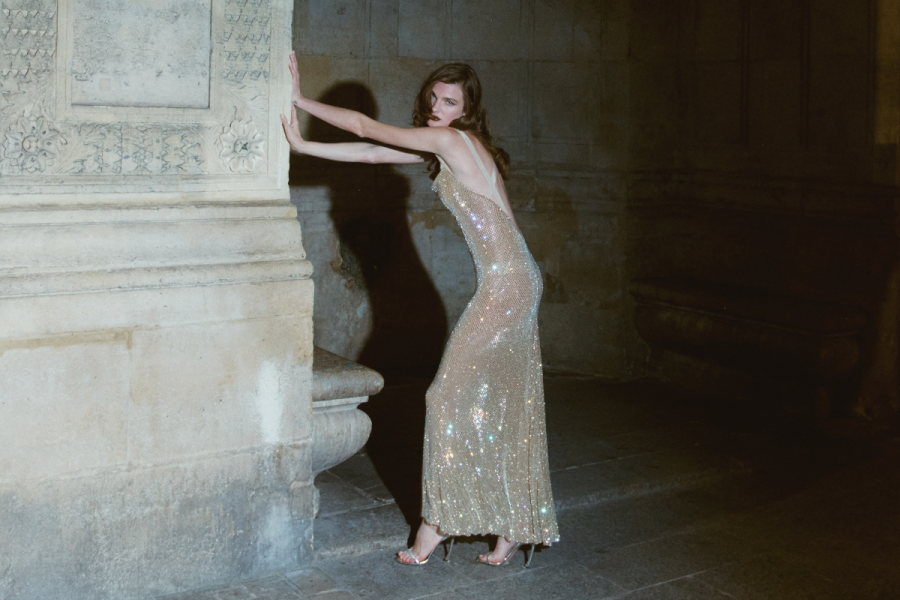
Due to Russian strikes and frequent air-raid alarms, Ukrainian Fashion Week relocated three runway shows to a bomb shelter this season.
On 4 September, a Russian drone attack on Ukraine's Security Service headquarters in central Kyiv injured at least a dozen people. Air-raid alerts required organisers to reschedule or move several Spring/Summer 2027 shows into bomb shelters.
The next day, during an air-raid alert, attendees moved underground at the Mystetskyi Arsenal, where shows by Darja Donezz and Vorozhbyt&Zemskova continued in the shelter. Viktor Anisimov's finale had also been relocated underground the previous day after an air alert.
With more Russian attacks happening during the day, Ukrainian Fashion Week just wrapped one of its most challenging seasons yet – but it carried on despite the constant air alarms – and even held three shows – guests dressed to the nines – in a bomb shelter. pic.twitter.com/nXE6KOO7Hi
— KyivPost (@KyivPost) September 9, 2026
A Different Fashion Week
Increased daytime attacks made this season particularly challenging for Ukrainian Fashion Week organisers.
Yelyzaveta Ushcheka, CEO of Ukrainian Fashion Week, noted that previous seasons were less affected because most Russian attacks occurred at night.
'Before, we had more attacks at night, and that's why it didn't interrupt Fashion Week,' Ushcheka said.
'So, it was around... I'd say, 10 air raid alarms in four seasons of Ukrainian Fashion Week. It wasn't that challenging – well, of course it was – but especially this season we faced more challenges.'
She added that designers' ability to keep creating is especially meaningful amid the destruction and constant flow of bad news.
This season, about 50 Ukrainian brands participated in runway shows, presentations, and a trade show. Despite interruptions, organisers continued with the programme.
Production also remains primarily domestic, making the event's continuation especially important for an industry operating during wartime.
Beyond War Disruptions
Ukrainian fashion businesses also face unstable electricity, disrupted logistics, and staff departures due to the war.
Maria Gavryliuk, co-founder of Gunia Project, stated that these challenges have made brand development in Ukraine particularly difficult.
'We are facing lots of troubles and lots of challenges – with electricity, with logistics, with people going to the army or moving out of Ukraine,' she said.
'It's quite hard to develop your brand right now in Ukraine, but we have our mission, we have our vision, so we're trying to keep going and keep growing.'
This season highlighted Ukrainian craft and cultural identity. The Behind the Craft exhibition focused on traditional craftsmanship reinterpreted through contemporary design.
War on the Runway
This season emphasised Ukrainian craftsmanship, traditional techniques, and cultural identity.
The ongoing conflict also influenced several collections. Yuliia Perekriostova's Juliya Kros presented adaptive clothing for people with disabilities, including two war veterans with prosthetic limbs.
'Fashion reflects what's happening in society; it plays out on the runway. Fashion can't be separate from what's happening around us. Everything going on, we express through clothing, through our brands. Through this show, we're broadcasting our reality.'
Designer Khrystyna Rachytska's Opora/Opir (Support/Resistance) collection explored Ukrainian ethnic dress and cultural identity, drawing directly from wartime reality.
Meanwhile, designer Oleksandra Sakhaudinova won the Grand Prix in the young designers' competition 'Look Into the Future. New Forms of Reality' for her collection Reclaiming the Light.
Sakhaudinova shipped her collection to Kyiv via Nova Poshta days before the show, only learning it had arrived safely on presentation day after Russian strikes hit the carrier's facilities in Kyiv and Odesa.
Ukraine's Fashion Week Reality
For Ukrainian models and organisers, moving between the runway and shelters has become a normal part of working during the war.
This season showed how much the five-year full-scale war has changed Fashion Week, highlighting a reality that extends beyond fashion as Ukrainians continue to live and work under the threat of Russian attacks.