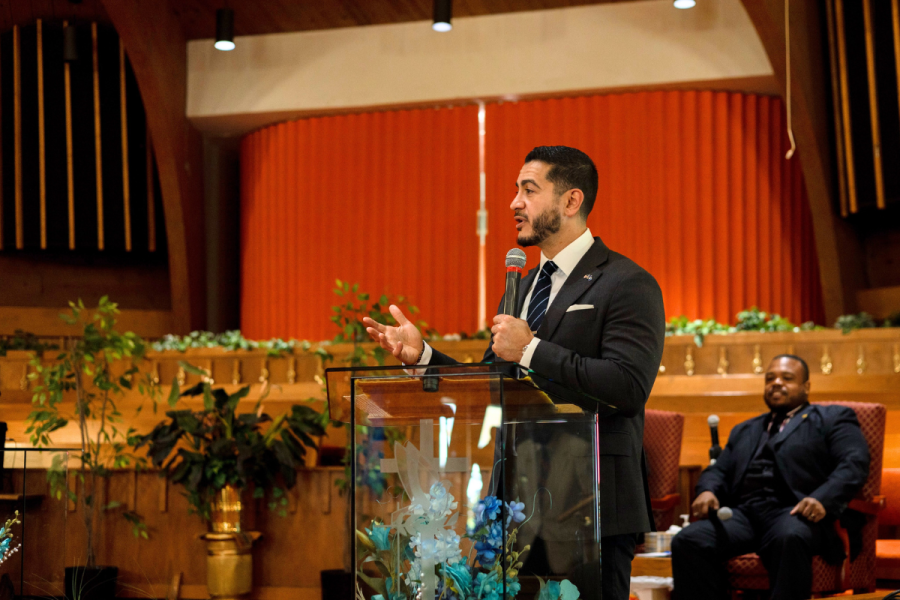
Abdul El-Sayed has offered a rare glimpse into his family life, revealing how spending several nights away from his daughters while campaigning has prompted him to reflect on fatherhood, childhood and the opportunities every young person deserves.
The Michigan Senate candidate was asked about reconnecting with his girls after returning home, but his response quickly moved beyond his own family to address a wider question about society's responsibility towards children.
His comments have prompted an emotional discussion about childhood inequality, compassion and whether every child receives the same opportunities.
In the middle of a high-stakes Senate race, Abdul El-Sayed shares a humanizing moment: handling "bedtime duties" with his wife, Dr. Sarah Jukaku, and their two daughters.
by u/Electronic-Bus-3494 in Fauxmoi
El-Sayed's Message on Fatherhood
The moment began with a question about how El-Sayed felt reconnecting with his daughters after being away for several nights. Rather than simply describing how much he had missed them, the father-of-two shared a personal philosophy that he believes should shape how society treats children. 'If I have one philosophy, what would we build if we treated all of our kids like all of our kids?' he said.
He then reflected on the circumstances that shaped his own childhood, acknowledging that he had benefited from a peaceful upbringing and access to essential resources. 'I had this incredible gift of a peaceful upbringing with a great set of schools, clean air, clean water', he said.
For El-Sayed, those experiences came with a responsibility to make sure other children could enjoy the same foundations. He added that there is a responsibility to fight to ensure all children had access to those opportunities.


The distinction is central to his message: the things parents want for their own children should not be considered unreasonable expectations for anyone else's. Access to quality education and a safe, healthy environment should not depend on a child's family circumstances or where they happen to grow up.
El-Sayed and his wife, Dr Sarah Jukaku, have two daughters. Although he is campaigning for a seat in the US Senate, the exchange offered a personal glimpse into the family life behind his political ambitions.
Viewers React To His Powerful Message
The footage prompted an emotional response from viewers, many of whom focused on the wider meaning of his comments rather than simply the family moment. One commenter wrote: 'Thinking about this sentiment makes me emotional', adding that the fact this was not already the default mindset in society was a 'horrifying indicator for the lack of empathy in our mainstream culture'.
The commenter went on to argue that protecting children should be a shared moral responsibility, rather than an issue people only consider when their own families are affected. Others expanded on the idea of a community looking after children collectively, even when they do not have children of their own.
One viewer argued that children thrive when they have trustworthy adults beyond their parents, sharing how they had become a dependable source of support for their nieces and nephews as they grew up. Another described the sentiment as a reminder of 'neighborliness', saying society should return to treating care for one another as a virtue.
The footage also prompted discussion about the role of family life in political campaigning, with some questioning whether politicians should have to share intimate moments with their children to appeal to voters.Others defended the approach, pointing out that the children's faces were not shown and arguing that the message was about making El-Sayed more relatable amid the hostility surrounding his campaign.
The discussion added another dimension to the footage, with viewers considering not only his words but also the boundaries between a candidate's public and private life. Ultimately, El-Sayed's message was about extending the care and opportunities parents want for their own children to every child in society.
His question challenged viewers to consider what might change if access to good schools, clean air, clean water and a peaceful upbringing were treated as universal priorities. For the father-of-two, the responsibility does not end with looking after his own daughters, but includes fighting for a future in which every child has the chance to thrive.