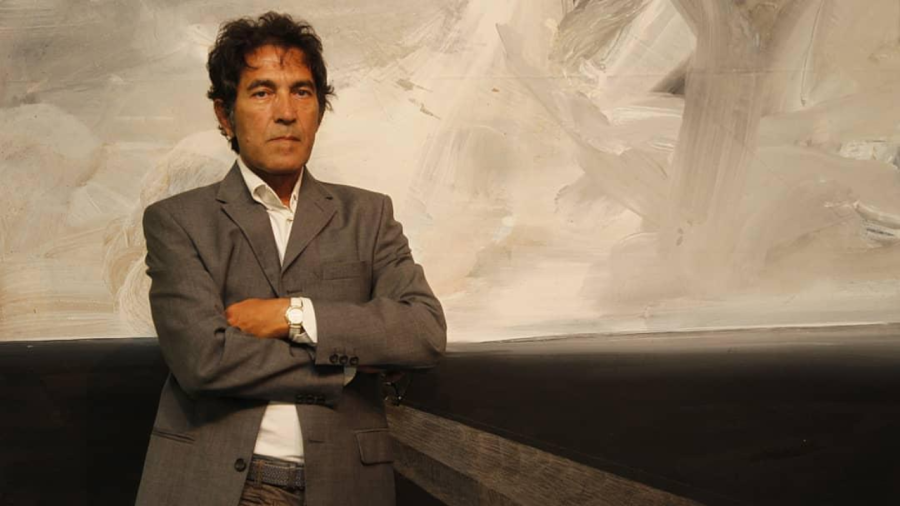
An Italian artist has managed to sell a sculpture for £13,000 ($18,300) without providing a statue, painting or anything else the buyer can physically see. Salvatore Garau's invisible artwork, Io Sono, meaning 'I Am', sold for €15,000 at auction in May 2021, leaving the buyer with a certificate of authenticity and instructions to reserve an empty space in their home.
The unusual sale sounds like something straight out of The Emperor's New Clothes, the classic tale in which people are persuaded to accept an invisible creation as something extraordinary. While Garau insists his sculpture exists through energy and imagination, the sale has continued to attract attention for its extraordinary price and unconventional approach to art.
The £13,000 Invisible Sculpture
Garau sold Io Sono through Italian auction house Art-Rite, where the work attracted bids that pushed its price beyond its original estimate of €6,000 to €9,000. The final €15,000 sale demonstrated that an artwork does not necessarily need a physical form to attract a buyer in the conceptual art market.
Unlike a traditional sculpture, there was no stone figure, metal structure or carefully carved object to take home. Instead, the buyer received a signed certificate of authenticity, making the transaction particularly unusual for anyone accustomed to spending thousands on something they can display on a shelf.
A Five-Foot Empty Space
The purchase came with a rather peculiar condition: Garau instructed the buyer to display the sculpture in a private home within an unobstructed space measuring approximately five feet by five feet. In other words, the owner was expected to reserve a small patch of empty space for an artwork that could not be seen.
There was no physical statue requiring special lighting, protective glass or temperature controls. The idea was that the designated space itself would become the setting for the sculpture, with viewers encouraged to imagine its presence rather than look for a tangible object.
The Artist's Unusual Explanation
Garau does not consider his work to be simply nothing. He describes it as immaterial, made of 'air and spirit', and argues that an apparently empty space can contain energy, thoughts and a presence that cannot be captured by the eye.
In explaining the concept, the artist referred to the Heisenberg uncertainty principle and the idea that a vacuum is not necessarily devoid of physical activity. However, the principle does not establish that Garau's particular sculpture exists as a physical object. His explanation is part of the artistic philosophy behind the work, rather than scientific proof of the sculpture's existence.


The Emperor's New Clothes Comparison
The sale has an obvious parallel with The Emperor's New Clothes, Hans Christian Andersen's famous tale about an emperor whose supposedly magnificent clothes cannot actually be seen. The story explores the pressure to accept something extraordinary, even when the evidence in front of you appears to suggest otherwise.

One online commenter explicitly compared Garau's concept to the tale, writing, 'There is a book about this concept. It's called the emperor's new clothes'. Another joked, 'Little do they know I already stole the sculpture. It's in my garage'. These reactions capture the humour and scepticism surrounding the idea, although they are individual opinions rather than evidence about the buyer or the artwork's value.
His Invisible Art Continued
Io Sono was not Garau's only experiment with immaterial sculpture. In February 2021, he presented Buddha in Contemplation in Milan's Piazza della Scala, marking the otherwise invisible installation with a square of tape on the pavement. He also presented Afrodite Piange, an installation associated with the area outside the New York Stock Exchange.
These works follow the same principle: the artist identifies a space as a sculpture and invites people to engage with it through imagination. His later work Davanti a te was also reported to have sold in Milan for €27,120, suggesting that the concept continued beyond the original auction.
When Nothing Becomes Art
Garau's work sits within a longer history of conceptual art, which challenges the assumption that artistic value must come from physical materials. Maurizio Cattelan's duct-taped banana, Comedian, and Piero Manzoni's provocative Artist's Shit are other examples of works that have questioned what collectors are actually paying for.
The comparison with The Emperor's New Clothes ultimately comes down to perspective. Some may see an imaginative challenge to traditional sculpture, while others may struggle to understand paying thousands for an empty space. Either way, Garau's £13,000 sale raises an intriguing question: if art does not need to be visible, what exactly makes it worth the money?