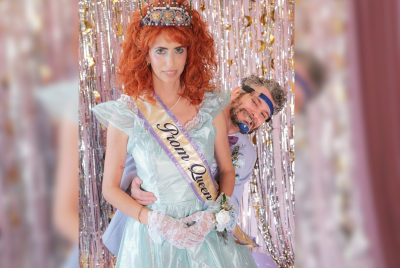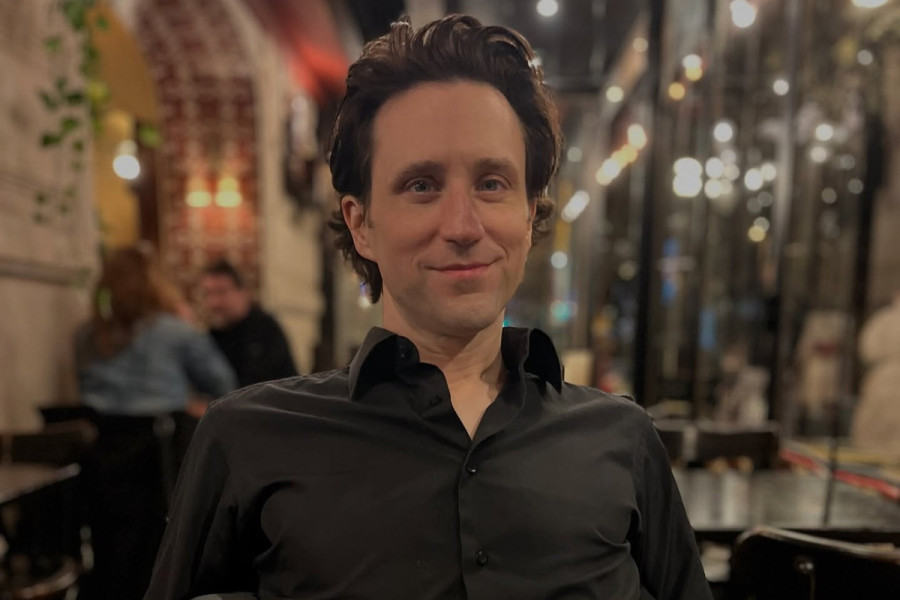
A man who lost his leg to cancer as a child has spent 16 years turning his disability into the inspiration for some of Halloween's most imaginative costumes. Josh Sundquist, a motivational speaker and former Paralympic athlete, began his annual costume tradition in 2010 and he has built a following with costumes designed around his body and mobility.
On 31 October 2026, Sundquist took inspiration from Pixar's Toy Story, transforming himself into Forky, the quirky spork character. His wife, Ashley, dressed as Woody, while their 3-year-old son will join him as Buzz Lightyear, making this year's Halloween celebration a family affair.
Sundquist exclusively told PEOPLE that his son is a big fan of the franchise, making the opportunity to dress up together particularly meaningful. 'To have that layer of fun or whimsy with the costumes in real life, not just on the internet, is a fun development in my Halloween saga,' he said.
Josh Sundquist's Halloween Costumes Began With a Leg Lamp
Sundquist was just 9 years old when he lost his left leg to cancer. After recovering, he went on to become a competitive athlete, eventually representing the United States at the 2006 Winter Paralympics in Turin, Italy.
Although his Halloween costume tradition began in 2010, it was his 2012 transformation into the leg lamp from the 1983 film A Christmas Story that brought him widespread attention. The design incorporated his amputated leg into the iconic Christmas decoration, turning something that might traditionally be viewed as a limitation into the centrepiece of a clever costume.
For Halloween, I dressed as a leg lamp. I had to shave my leg, but I think it was worth it. RT if you agree. pic.twitter.com/Fi0otUo4
— Josh Sundquist (@JoshSundquist) October 29, 2012
Over the years, Sundquist has continued to find characters and objects that lend themselves to similarly inventive designs. His previous transformations include the Genie from Aladdin, Tigger from Winnie the Pooh, an inflatable tube man, a Pixar lamp, and a flamingo.




One principle has remained consistent throughout his costume-making journey. As he told PEOPLE in 2024, he wants his creations to 'make it visually clear that it would be impossible for a two-legged person to wear.'
His Forky Costume Incorporates His Crutches
Sundquist's latest transformation presented a different set of creative challenges. He has worked with costume maker Calen Hoffman since 2020, and the pair had to figure out how to recreate Forky's oversized head and disproportionately long arms while keeping the outfit practical to wear.
The character's unusually long arms provided an opportunity to incorporate something Sundquist uses in everyday life: his crutches. Rather than treating them as accessories that needed to be concealed, he wanted them to become part of the costume itself.
'Most of my costumes don't involve the crutches, but they are a part of how I get around, and I like the idea of them being a part of what makes the costume unique or makes it something that only I could wear,' he explained.
He added that Forky's unusually long arms made it possible to integrate the crutches and create the illusion that they were extensions of his arms. The biggest challenge was finding a way to recreate the character's oversized head without making it impractical. Sundquist said the team had to determine how large they could make it while retaining Forky's recognisable spork appearance.
The choice of Forky also comes as the character returned for Pixar's Toy Story 5, giving the costume another connection to the franchise's enduring popularity.
Josh Sundquist Hopes His Costumes Inspire Other Amputees
For Sundquist, the annual Halloween projects have grown into something bigger than an opportunity to entertain people online. He believes they have helped encourage people to see amputees in a different light, associating their experiences with creativity and humour rather than focusing solely on their disabilities.
'I love that if someone sees an amputee and instead feels this remembrance of a spark of creativity or humor,' he told PEOPLE. He added that he believes his costumes have had a positive effect beyond simply producing funny images.
He is particularly encouraged by messages from families whose children have disabilities or special needs and find inspiration in his work. Sundquist hopes his creations can show young people that their differences do not have to limit their ability to express themselves.
He now wants to 'actively promote adaptive costumes' by encouraging people to share their own ideas and helping amplify their designs. Although he has no immediate plans to stop his annual Halloween tradition, he recognises that other children and families should have the opportunity to follow a similar creative process.
'I have no plans to stop doing this, but someday I won't,' he said. His ultimate goal is to make adaptive costume-making more accessible, giving the next generation not only inspiration but practical examples they can use to create something uniquely their own.