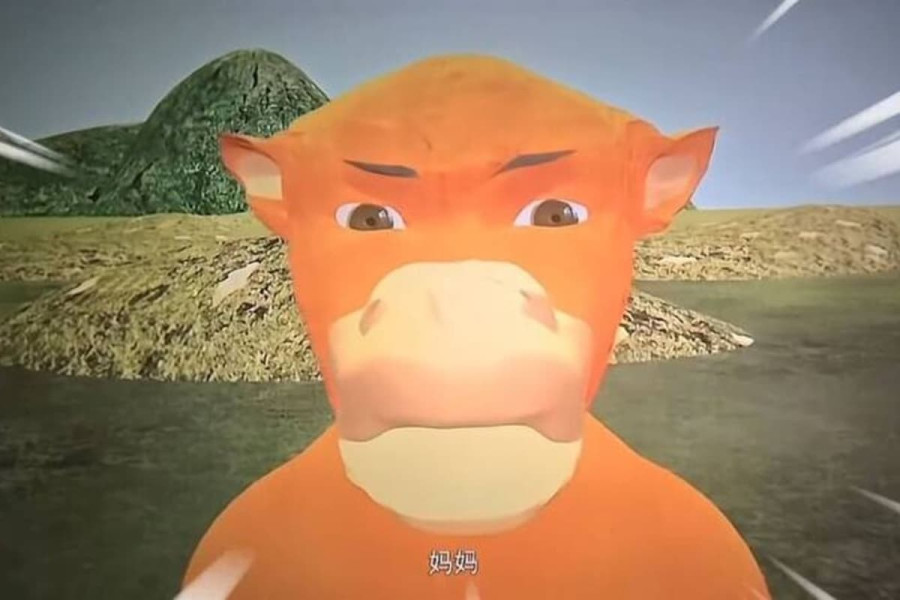
A low-budget animated film made by a mother-and-son team has earned nearly $10 million (£7.44 million) at the Chinese box office, contrasting with the disappointing performance of the country's first fully AI-generated feature film, which reportedly cost $1.5 million (£1.11 million) to produce. The animated film, Niu Lai, became an unexpected cinema hit after initially attracting little attention when it was released in August 2026.
The film was made over five years by director Xin Yumeng and his mother, screenwriter Sun Lifang. Its success comes as Sanxingdui: Future Past, China's first fully AI-generated feature film to receive a nationwide theatrical release, struggles to attract audiences following its debut on 23 October.
According to estimates from Chinese ticketing platform Maoyan, Sanxingdui: Future Past had generated approximately £136,000 ($182,600) by 26 October, a fraction of its reported production budget of more than £1.12 million ($1.5 million). The animated film, Niu Lai, had grossed 64.29 million yuan (nearly $10 million) by 26 October, according to estimates reported. It became an unexpected cinema hit after initially attracting little attention when it was released in August 2026.
'Niu Lai' Becomes an Unexpected Chinese Box Office Hit
Niu Lai, which translates to 'The Cow is Coming,' follows a young calf and its adventures in an animated world. The 86-minute film features a deliberately rudimentary visual style, with simple character designs and animation that differs considerably from the polished computer-generated productions commonly released in cinemas.
Xin Yumeng and Sun Lifang reportedly handled almost every aspect of the production themselves, including directing, screenwriting, voice acting and producing. Sun also composed and performed the film's closing song. The film opened in Chinese cinemas on 5 August 2026 but initially struggled to find an audience. It reportedly earned just 7,700 yuan (approximately £860 or $1,155) during its first 10 days, with fewer than 300 tickets sold nationwide.
Its fortunes changed after clips and discussions about its unusual animation began circulating on Chinese social media platforms. The film's unconventional appearance attracted attention, prompting more people to visit cinemas and experience it themselves.
China's First AI Film Flops at the Box Office
In contrast, Sanxingdui: Future Past has experienced a much weaker theatrical opening despite a considerably larger production budget. Produced by Bona Film Group, the science-fiction film follows an archaeologist tasked with saving a future world dominated by artificial intelligence. Its characters, performances, voices and backgrounds were generated using AI technology.
Nearly 100 people reportedly worked on the production for more than two years. Bona said the film cost more than 10 million yuan ($1.5 million) to make. The film opened nationwide on 23 October, with more than 10,000 screenings scheduled for its first day, according to ticketing platform Maoyan. Advance ticket sales were significantly lower than expected.
The presale revenue stood at approximately 80,000 yuan ($11,980 or £8,920) on Friday morning, with projected box-office earnings remaining below 150,000 yuan (£16,770 or $22,500). By Monday, 26 October, estimates placed its total earnings at around 1.21 million yuan ($181,000 or £135,200), according to Cartoon Brew.
Bona Film Group executive Jiang Defu acknowledged the film's lukewarm reception in an interview with Chinese film industry outlet Yuli. He described the theatrical release as an important experiment for the company and the wider film industry.
'We are the first to try it, the first to get a theatrical release permit and the first to be tested by the audience,' he said.


Two Different Approaches to Animation
The contrasting box-office performances have brought attention to two very different approaches to filmmaking in China. While Sanxingdui: Future Past was developed as a technological experiment using AI-generated visuals and performances, Niu Lai was produced through a small-scale, independent process led by two family members.
The success of Niu Lai followed an unusual promotional journey, with online discussions about its basic animation helping introduce the film to a wider audience. Its initial lack of commercial attention also contrasted with the extensive theatrical rollout given to the AI-generated production.
China's growing use of artificial intelligence in entertainment has largely been visible in short-form productions. According to figures, more than 95 per cent of over 120,000 microdramas released in China during the first quarter of 2026 were AI-generated. The performance of Sanxingdui: Future Past has highlighted the difference between the growing use of AI in short-form entertainment and the commercial challenges facing fully AI-generated feature films in cinemas.