Dior's Christmas campaign was supposed to celebrate the magic of hand-drawn animation, but eagle-eyed viewers have spotted something they believe wasn't on the festive wish list: artificial intelligence. The luxury fashion house's animated short, Christian Dior's Night in Color, has sparked accusations that its supposedly traditional illustrations received a little digital assistance.
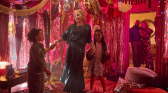
Released on 4 November, the six-minute film features a whimsical Parisian Christmas adventure directed by French animator Sylvain Chomet. However, viewers inspecting individual frames have pointed to warped lettering, peculiar finger movements, and a misspelt dog tag as possible signs of AI-generated content.
The controversy has reportedly prompted a response from the filmmakers, who deny using generative AI but acknowledge employing automated technology during production. Dior wanted to present an enchanting 'night in color' but instead got viewers investigating the grey area around potential AI usage.
Dior's Christmas Magic Comes Under the Microscope
Set in 1949, the film follows Christian Dior and his atelier's team of bees, a pup, and an unusually talkative chair as they race to create a gown for Marlene Dietrich. The fantastical story features a star-studded voice cast, including Robert Pattinson as narrator, Rihanna as the Lucky Star, and Josh O'Connor as a chair.
Chomet, known for The Triplets of Belleville, brings his distinctive illustration style to the project. Dior previously described the production as hand-drawn using techniques dating back to the 1940s.

However, social media users began questioning that description after pausing the film. Screenshots circulating online highlighted distorted hands, inconsistent character details, and lettering that appeared to change between frames. Instagram account Milktree Agency also examined the controversy, pointing to the misspelt dog tag and other visual irregularities.
It's worth noting that a peculiar-looking frame isn't necessarily proof of AI involvement. Traditional animation frequently uses exaggerated transitional drawings to create fluid movement, meaning characters can look rather strange when the action is frozen.
The Filmmakers Respond to AI Accusations
The controversy took another turn when Chomet and producer Aton Soumache addressed the accusations in an interview with Variety. Both denied that generative AI had created the film's artwork. Soumache explained that approximately 20 artists, including six animators, worked on the production over seven months.
However, he acknowledged that an automated interpolation system was used for a small portion of the process. Interpolation involves generating intermediate frames between existing images to create movement, although the technology can take different forms.
Chomet also defended the unusual character movements as established animation techniques rather than evidence of artificial intelligence.

Prada's Hand-Drawn Christmas Campaign Adds to the Debate
The timing has made Dior's controversy especially easy to compare with other luxury houses that launched their Christmas campaigns. On 27 October, Prada released Drawing Prada: Animated by Hand, a festive campaign directed by veteran animator John Pomeroy. Its emphasis on traditional artistry arrived just days before Dior unveiled its own nostalgic Christmas production, inviting comparisons between the two luxury houses.
For fashion brands that celebrate craftsmanship, authenticity makes a world of difference. Hand-illustrated animation shares something with haute couture: both derive much of their appeal from the genuine skill and patience behind the finished creation. Dior's film remains a visually elaborate festive production with a magical storyline that could make anyone long for the Christmases of their youth.
The Christmas story may be set in 1949, but the questions surrounding its production are unmistakably modern. Dior wanted audiences to admire the magic behind every frame. Instead, some viewers decided to pause every frame in order to give the colourful night a rather grey outlook. True to the opening narration, 'all was peaceful, all was still...' until the AI allegations, that is.